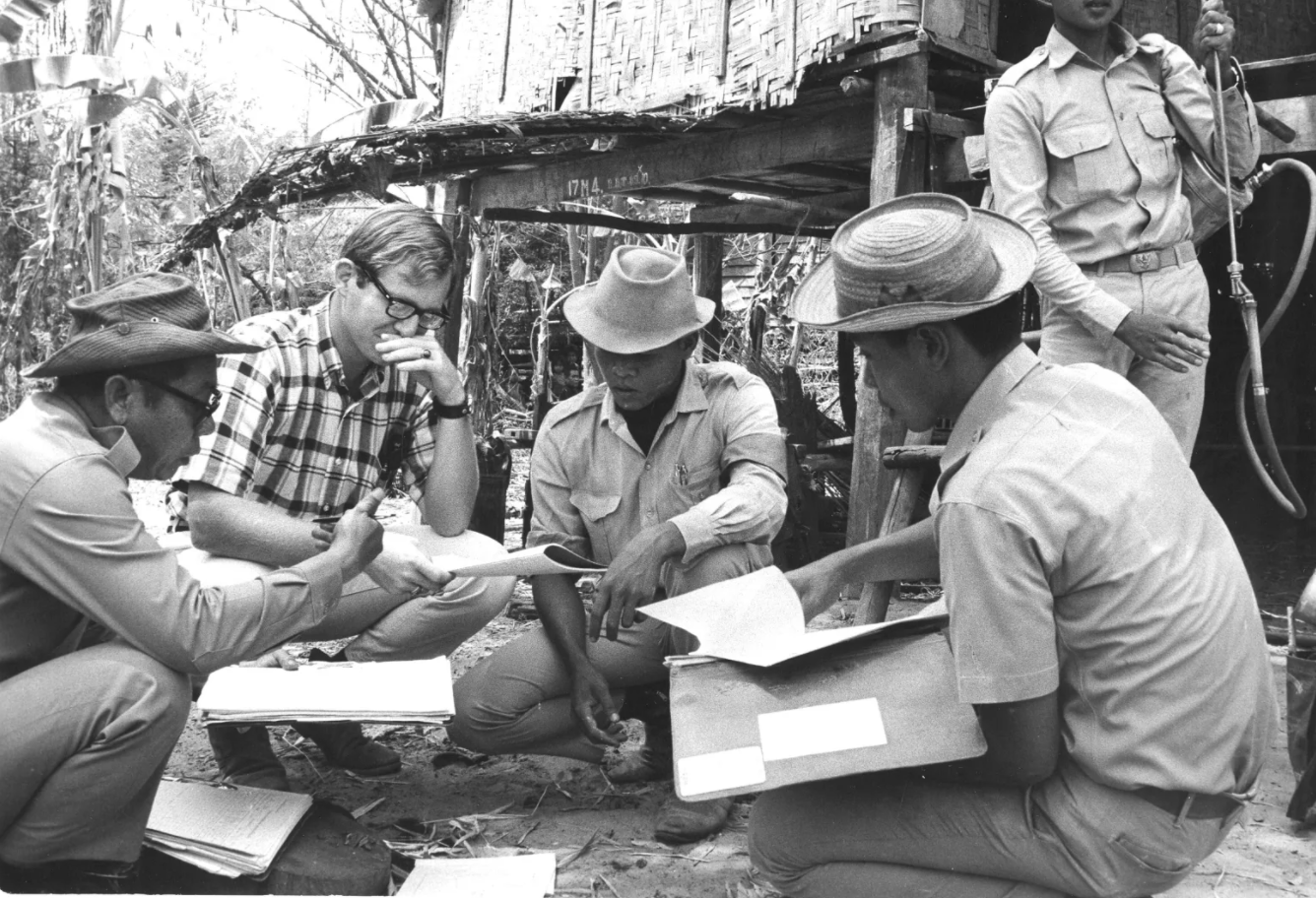
“No one in the world need be hungry or cold, unclothed, uneducated or unmedicated,” the cultural anthropologist Margaret Mead wrote in a 1962 essay in Foreign Affairs. Poverty was “remediable”—human beings collectively possessed the resources and technological know-how required to raise standards of living for all. The problem, Mead argued, was the way the world was organized. The nation-state was “an imperfect unit for the administration of human welfare” and “an even more imperfect one for the administration of economic development.”
With the United States and the Soviet Union competing for influence, development projects reflected the political interests of their sponsors—a dynamic that, with renewed focus on geopolitical competition, has once again become familiar. To escape this trap, Mead urged policymakers to think about development not in terms of nations, but in terms of people. “There is a crying need for transnational organizations, whether it be for the sharing of scarce or unevenly distributed natural resources, the eradication of disease, or the use of scarce intellectual resources,” she wrote. “There is a need for a new kind of nationhood within which every people may find dignity.”
|
— Daniel Kurtz-Phelan, Editor |